


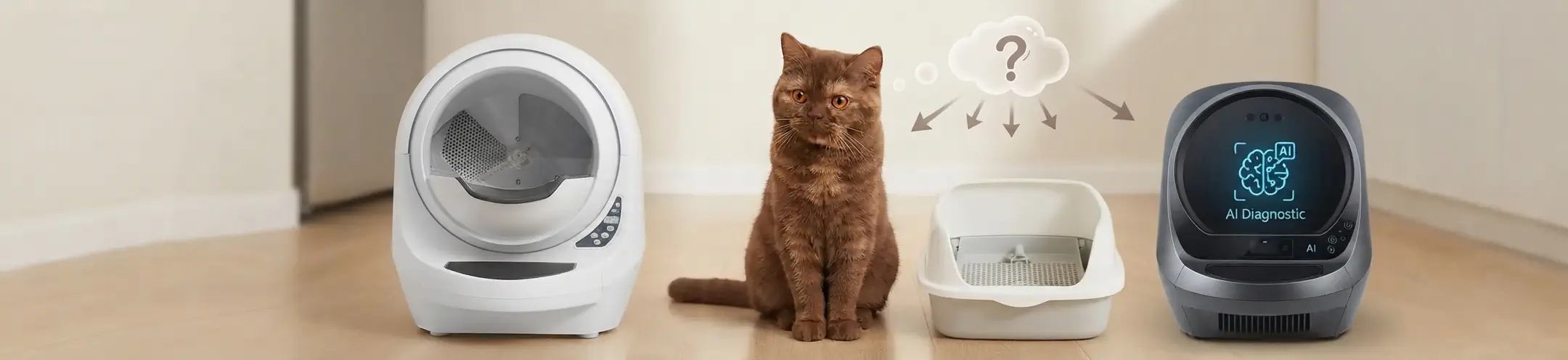
In the era of smart homes, robot vacuums, and smartphone-controlled feeders, the question about self-cleaning litter boxes arises with almost every kitten pickup. The promise is tempting: no more daily scooping, no more unpleasant odors, and 21st-century convenience.
But is it really? Is a machine costing €700 ($700) better for a cat than a plastic litter box for €12 ($10)?
As British Rainbow*PL, we have tested many solutions. Today, we are putting cat litter technology under the microscope – from the cheapest semi-automatic solutions to space-age diagnostic stations. Here is our honest opinion, free from marketing fluff, focusing purely on feline health.
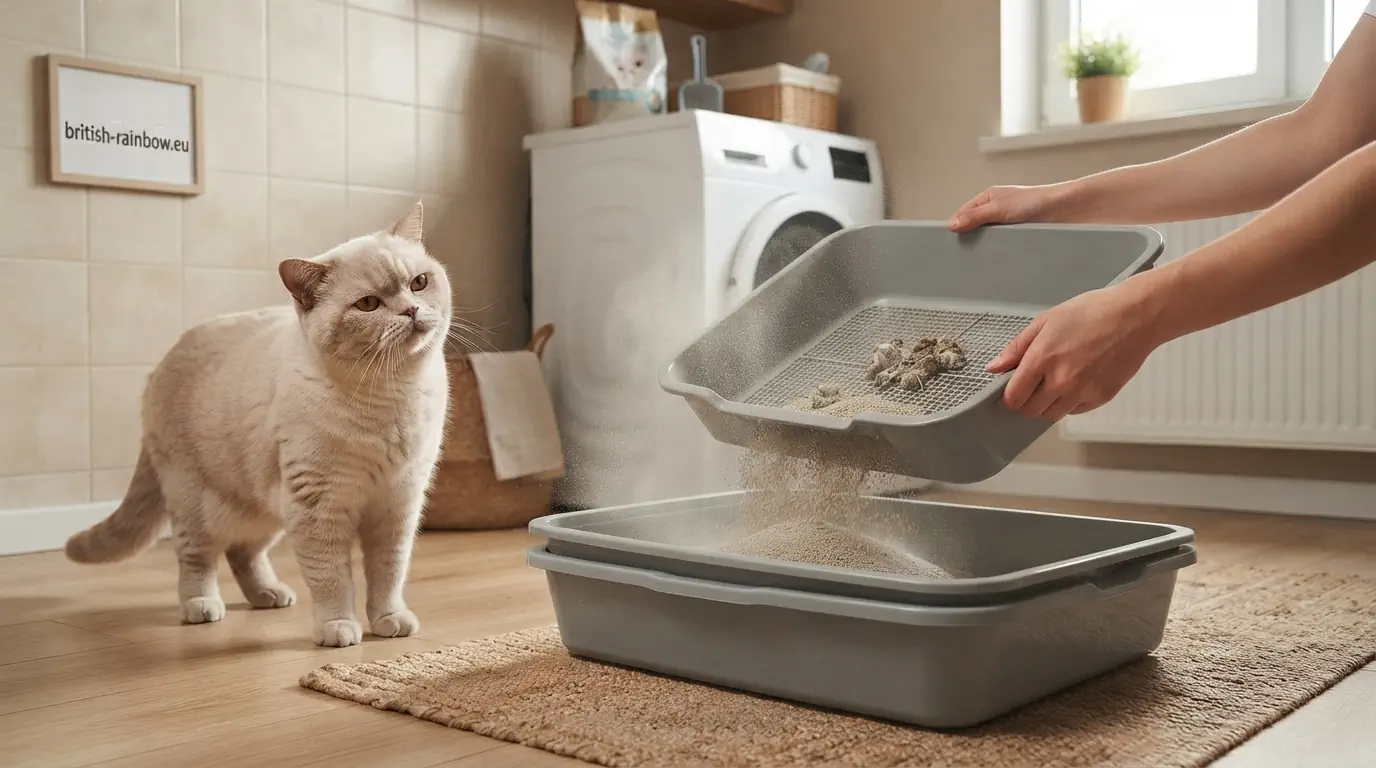
Level 1: Semi-Automatic and "Sifting" Litter Boxes (Budget)
This solution is for those who want to make life easier without spending a fortune or plugging the litter box into an outlet.
How does it work?
Usually, it's a system of sieves, levers, or rotating mechanisms powered by your own muscles. You tilt the box, the clean litter falls through the sieve, and the clumped waste remains on top to be discarded.
Pros and Cons:
-
Pros:
- Low price (from €25 to €70 / $30 to $80).
- No faulty electronics or cables.
- Quiet operation (doesn't scare the cat).
-
Cons:
- Requires your manual input (you have to shake/rotate it).
- Often imprecise (breaks up weaker urine clumps, dirtying the clean litter).
- Dust rises during the sifting process.
👉 Breeder's Opinion: It's a compromise. It often gets dirtier than a standard litter box (crevices in the sieves), and there's twice as much washing involved. For a large British Shorthair, these systems are simply too cramped.
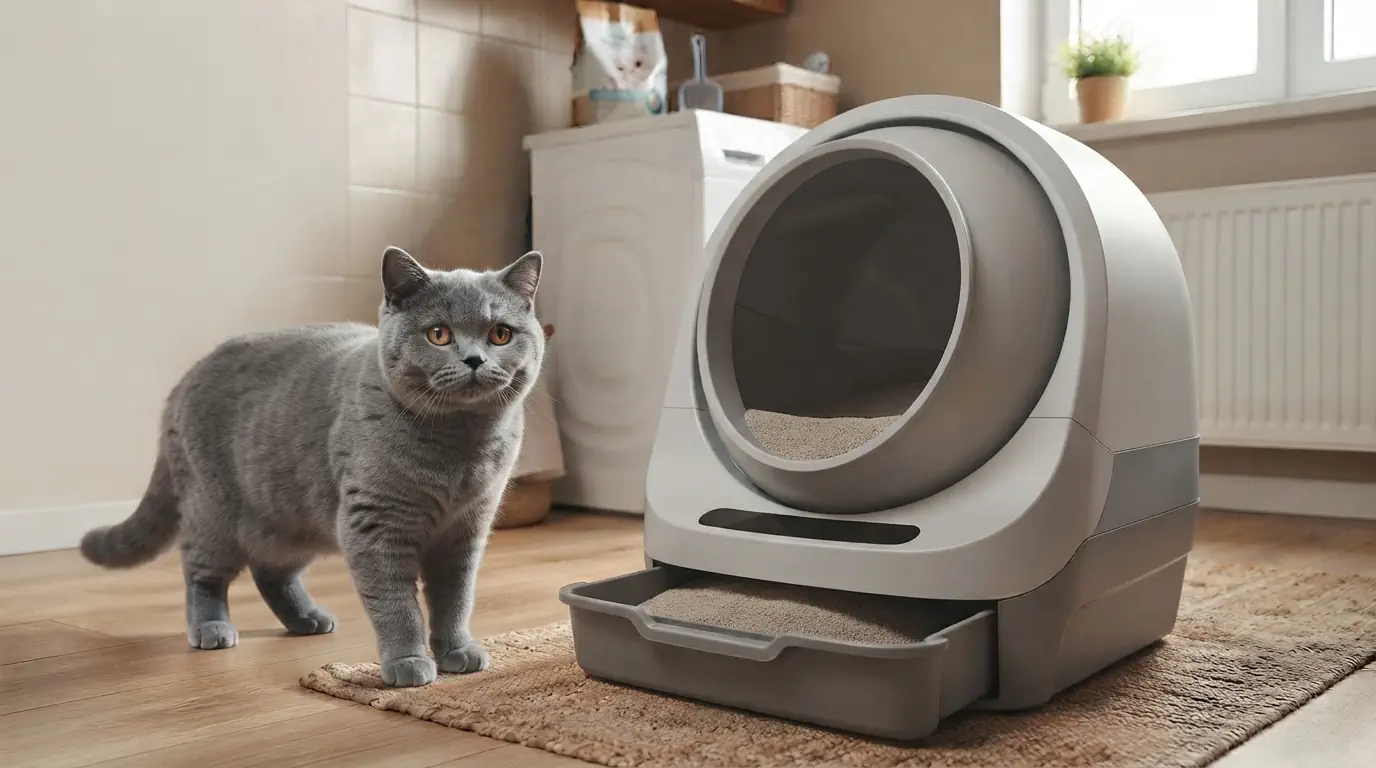
Level 2: Standard Cleaning Robots (Mid-Range)
The most popular segment. Devices that "do the job" for us.
How does it work?
Sensors detect the cat's presence. A few minutes after they exit, the drum begins to rotate. The litter is sifted, and the waste falls into a sealed container at the bottom (into a bag).
Pros and Cons:
-
Pros:
- Time-saving: You replace the bag once every few days (with one cat, even once a week).
- Odor control: Waste is quickly isolated.
- Cleanliness: The cat always enters clean litter (no risk of them refusing to go because "someone didn't flush").
-
Cons:
- Size: Massive as a washing machine on the outside, but often claustrophobic inside.
- Reliability: It's mechanical. Motors can jam, and rubber seals degrade over time.
- Cleaning: A deep clean of the drum once a month is a logistical challenge (disassembling, washing in the shower).
👉 Breeder's Opinion: The drum size is key here. A British Shorthair is a powerful animal. If the litter box is too small, the cat will hunch over, dirty its fur, or simply start peeing on the bed. Look for models dedicated to large breeds (XL).
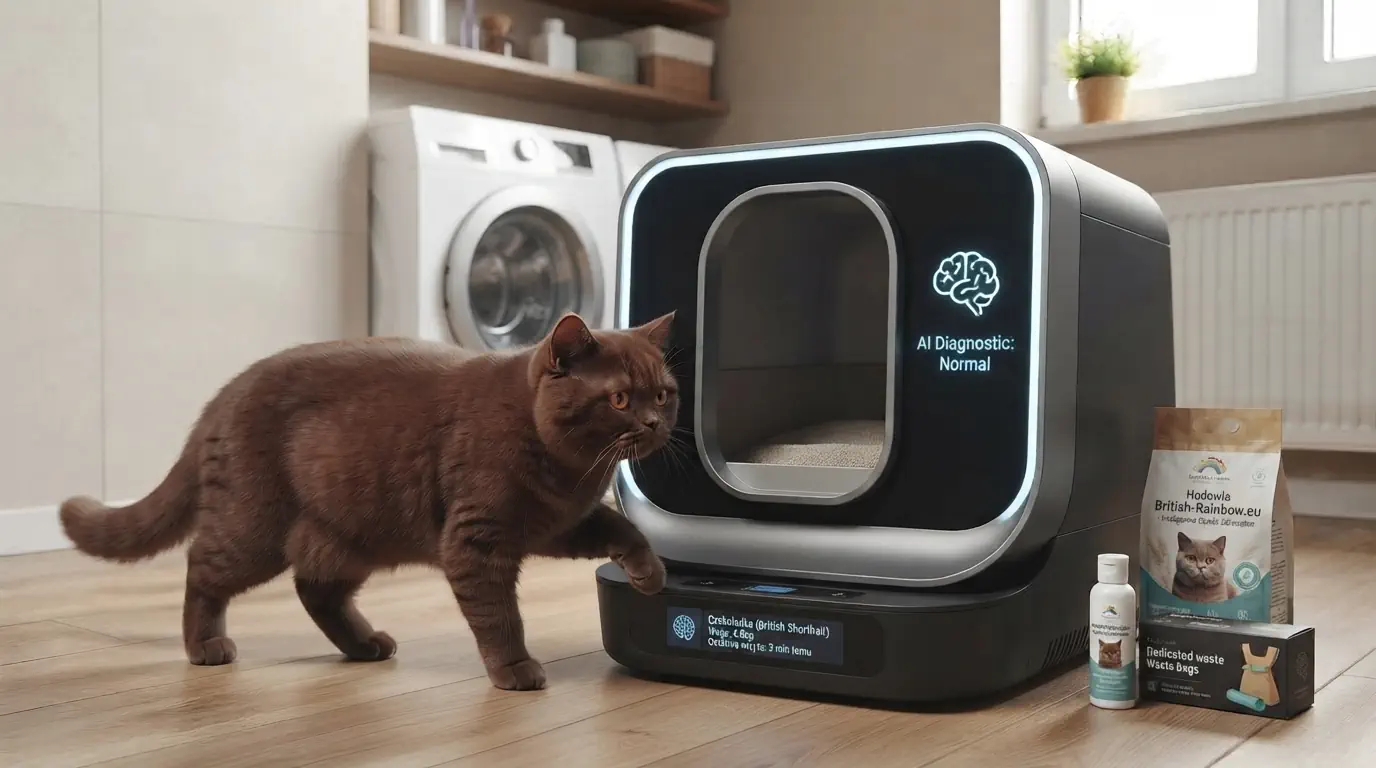
Level 3: High-End and AI Diagnostics (Premium Class)
This isn't just a litter box; it's a home medical laboratory.
How does it work?
Besides cleaning, the litter box connects to Wi-Fi and a mobile app. It features scales, cameras, and advanced algorithms.
What can these machines do?
- Weight monitoring: Perfect for tracking the weight of greedy British cats.
- Habit analysis: "Your cat used the litter box 10 times in an hour" – this is an immediate alert for bladder issues!
- Waste analysis (AI): The camera takes a picture of the waste and evaluates it on a medical scale (diarrhea/blood/normal).
- Cat Recognition: If you have two cats, the box recognizes them by weight or "face" and reports on the health of each individually.
Cons:
- Price (from €600 to €1200 / $600 to $1300).
- Operational costs (dedicated bags, liquids, filters).
👉 Breeder's Opinion: This is a brilliant tool for concerned owners and busy individuals. The ability to detect a blocked urethra (a life-threatening emergency!) before the cat starts meowing in pain is priceless. But remember – an app doesn't replace a vet visit.
⛔ RED FLAG: When is an automatic box FORBIDDEN?
As British Rainbow*PL, we must be brutally honest about safety.
1. The Kitten Trap
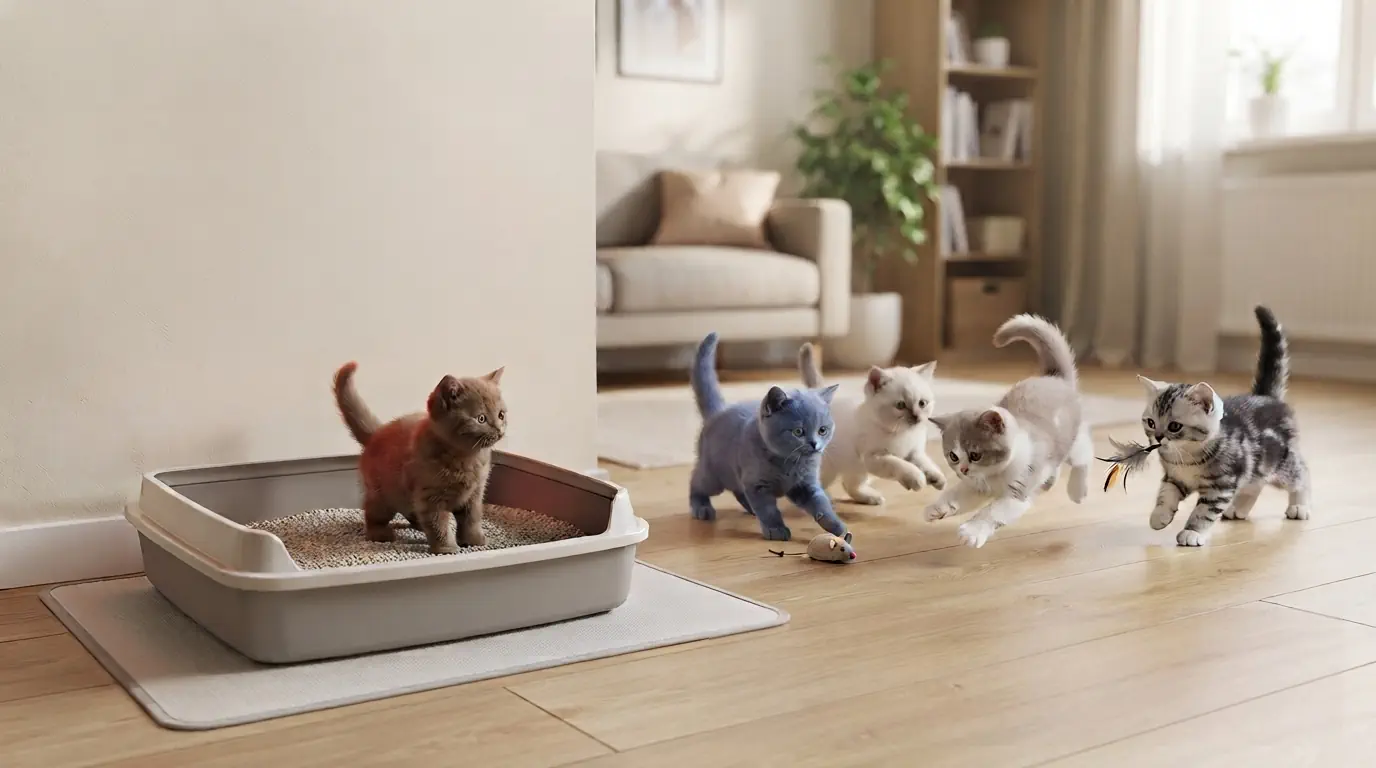
Absolute ban on using automatic litter boxes for kittens under 6 months of age (or weighing less than 2.5 kg / 5.5 lbs). Weight sensors in many models may not detect a light kitten. If the machine starts while the little one is inside, tragedy can strike. Even if the manufacturer claims to have an "anti-crush system," the risk of failure is too high. For a kitten – use only a regular litter box!
2. The Convenience Trap (The "Vanishing Stool" Syndrome)
When you scoop manually, you see everything. You see blood, you see parasites, you see changes in consistency. In an automatic box, everything disappears into the depths of the container.
- Our advice: Even with the best robot, check the waste container regularly. Do not blindly trust technology.