



It might seem that feeding a cat is a simple matter: pour some kibble, open a can, and you're done. However, anyone who has ever visited British Rainbow*PL knows that British Shorthairs are true aristocrats. They are gourmets, but also aesthetes.
It often happens that a cat is "picky," refuses to eat, or pulls food out with its paw onto the floor. In 90% of cases, the fault lies not in the taste of the food, but in... the bowl.
How to prepare a dining zone so that your British "teddy bear" eats with appetite and stays healthy? Here is our guide to feline savoir-vivre.
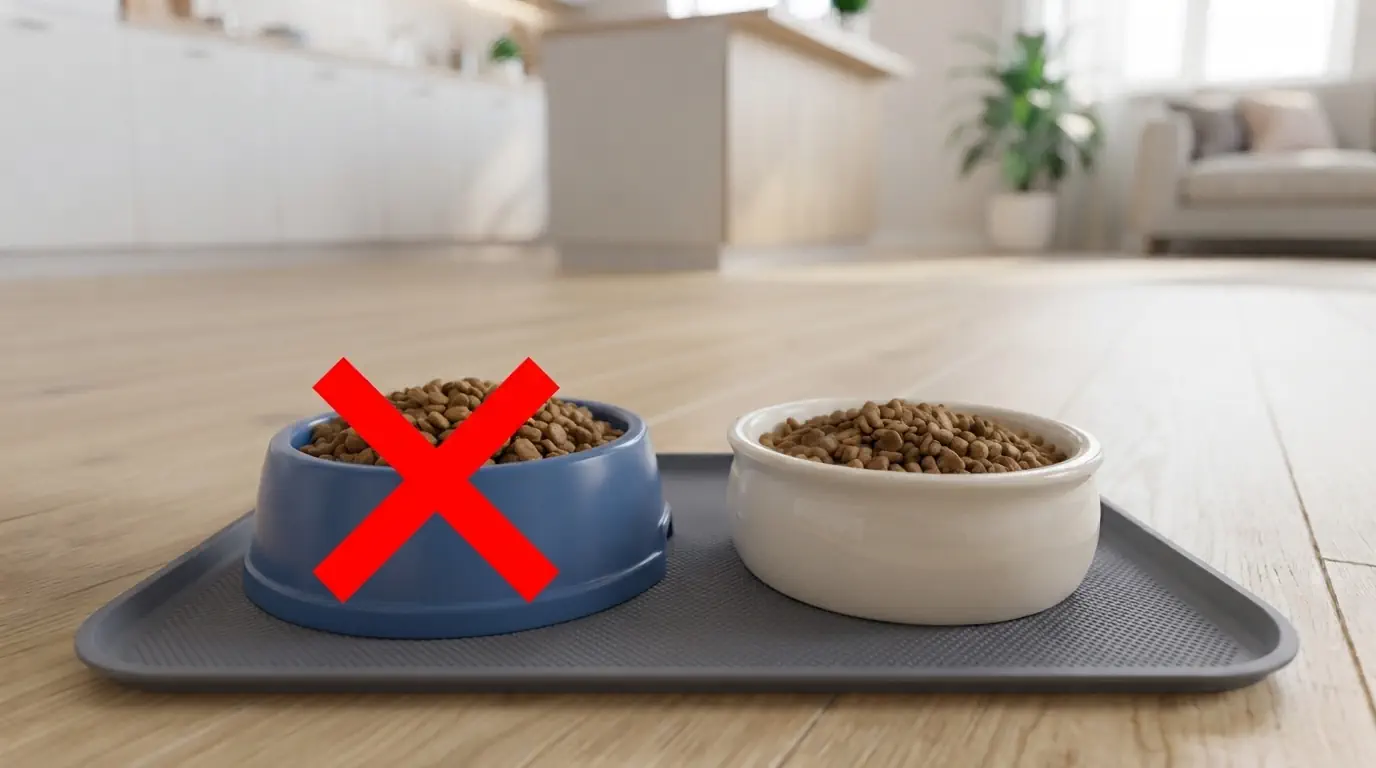
1. The Bowl: Why Plastic is Enemy Number One? ⛔
When you go to a pet store, you are greeted by a riot of colors of plastic bowls. They are cheap, light, and colorful. Avoid them at all costs.
At our British Rainbow*PL cattery, plastic bowls are blacklisted. Why?
- Bacteria Breeding Ground: Cheap plastic has a porous structure. Even after washing, bacteria accumulate in scratches.
- Feline Acne: This is no joke. Contact between dirty plastic and the cat's chin often causes blackheads, inflammation, and pustules (so-called feline acne). It is painful and difficult to treat.
- Odor: Cheap plastic absorbs the smells of food and detergents. A cat's sense of smell is many times more sensitive than ours – for them, eating from such a bowl is like eating dinner from an unwashed plate that previously held fish.
✅ What to choose?
Opt for ceramics or glass. They are hygienic, easy to sanitize in the dishwasher, and – importantly for strong British cats – heavy. A Brit likes to push the bowl with its nose, so solid ceramic will stay in place. Stainless steel is acceptable, but some cats don't like the metallic aftertaste or the sound of their collar hitting the rim. If you must choose plastic, use only those certified for human food contact.
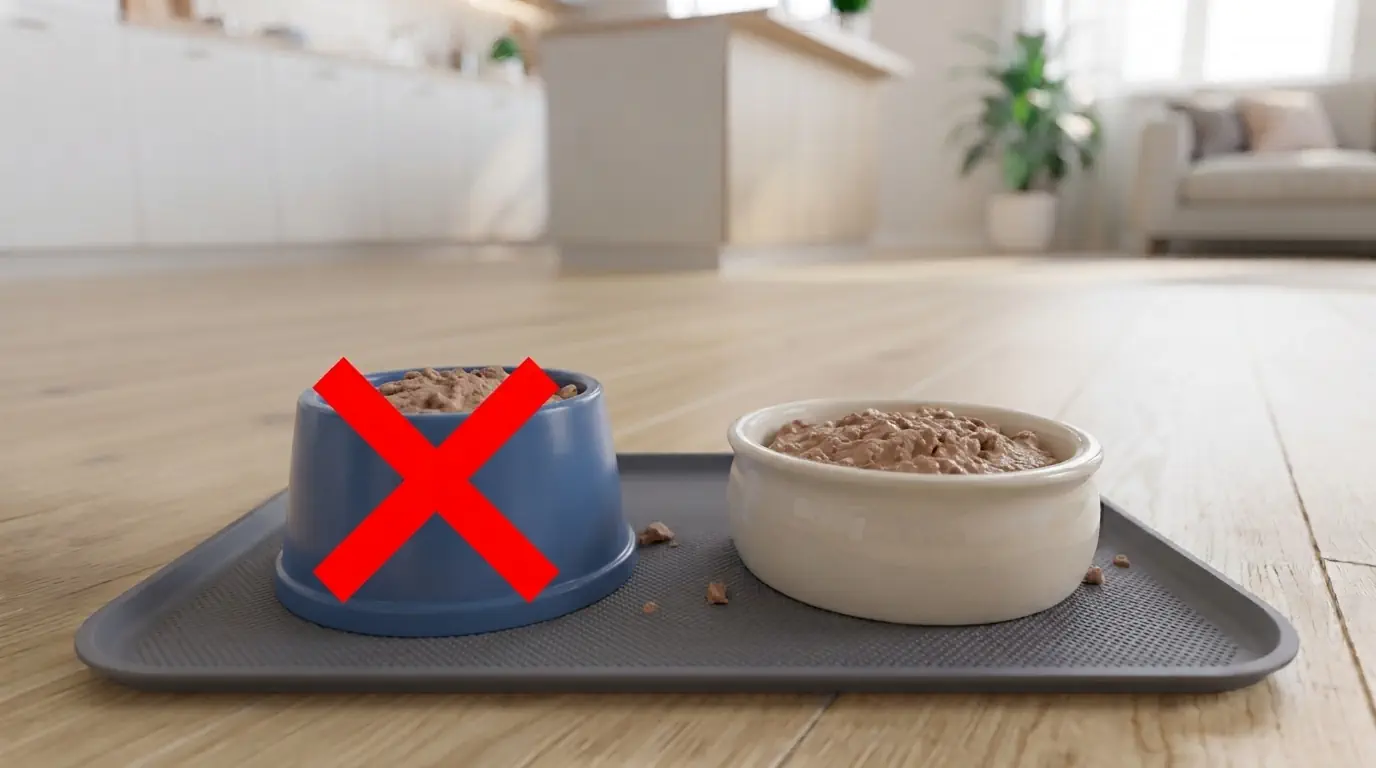
2. Whisker Fatigue (Whisker Stress) – Why Shape Matters? 📏
Look at the face of a British Shorthair. It is wide, round, with a short muzzle and magnificent, long vibrissae (whiskers). Whiskers are not decoration – they are extremely sensitive touch organs, connected to the nervous system.
Imagine having to eat soup from a tall mug without using your hands. When a cat puts its head into a deep, narrow bowl, its whiskers constantly rub against the edges of the vessel. This causes discomfort or even pain, known as Whisker Fatigue (or Whisker Stress).
Symptoms:
- The cat pulls food onto the floor with its paw.
- It eats only from the center and leaves food at the edges (even though it's hungry!).
- It is nervous while eating.
👉 British Rainbow*PL Solution: For our cats, we use flat plates or very wide, shallow bowls. Human dessert plates or special "whisker friendly" ceramic bowls (low rims, oval bottom) work perfectly.
3. Water: The Source of Life (and Healthy Kidneys) 💧
Cats naturally drink very little. Their ancestors obtained water from their prey. At home, especially with a diet based on dry food, dehydration is a silent killer of kidneys.
How to encourage your cat to drink?
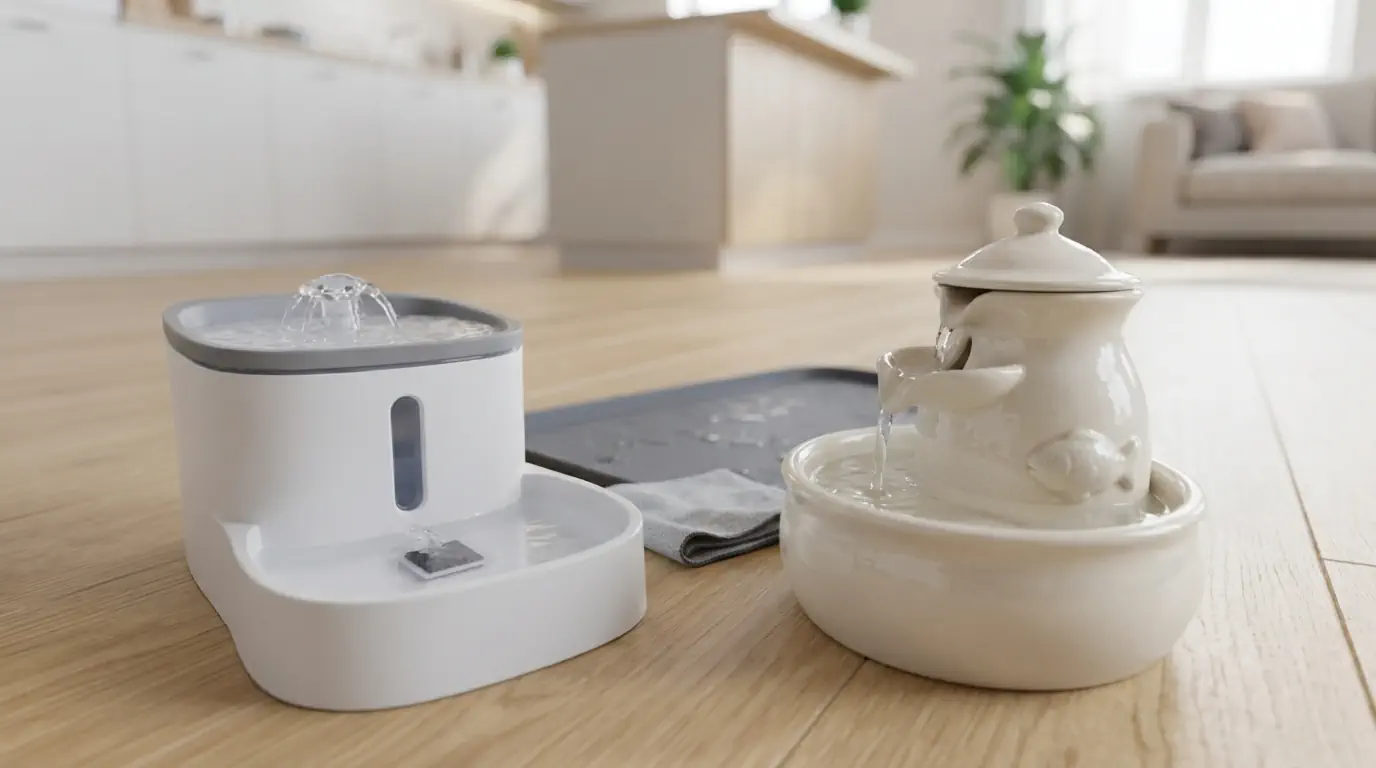
A. Water Fountain – An Investment in Health
Standing water in a bowl seems "dead" and unattractive to a cat. Flowing, bubbling, oxygenated water – that’s a different story!
- Ceramic Fountain: The best choice (easy to clean, doesn't grow slime as quickly as plastic).
- Plastic Fountain: Requires very frequent scrubbing and filter replacement.
At British Rainbow*PL, we noticed that after introducing fountains, our cats drink 50% more water!
B. Strategic Location (Breeder's Secret!)
Where to place the water? NEVER next to the food. In nature, a predator does not drink water that stands next to its prey (as it might be contaminated by blood/bacteria from the carcass). This instinct has survived. If you put the water bowl next to the kibble bowl, the cat will drink less.
Try an experiment: Place a large jar of water or a vase (with a wide mouth) in the bedroom, on a windowsill, or in the living room. You will see that the cat is more willing to drink there, "by chance," than in the kitchen.
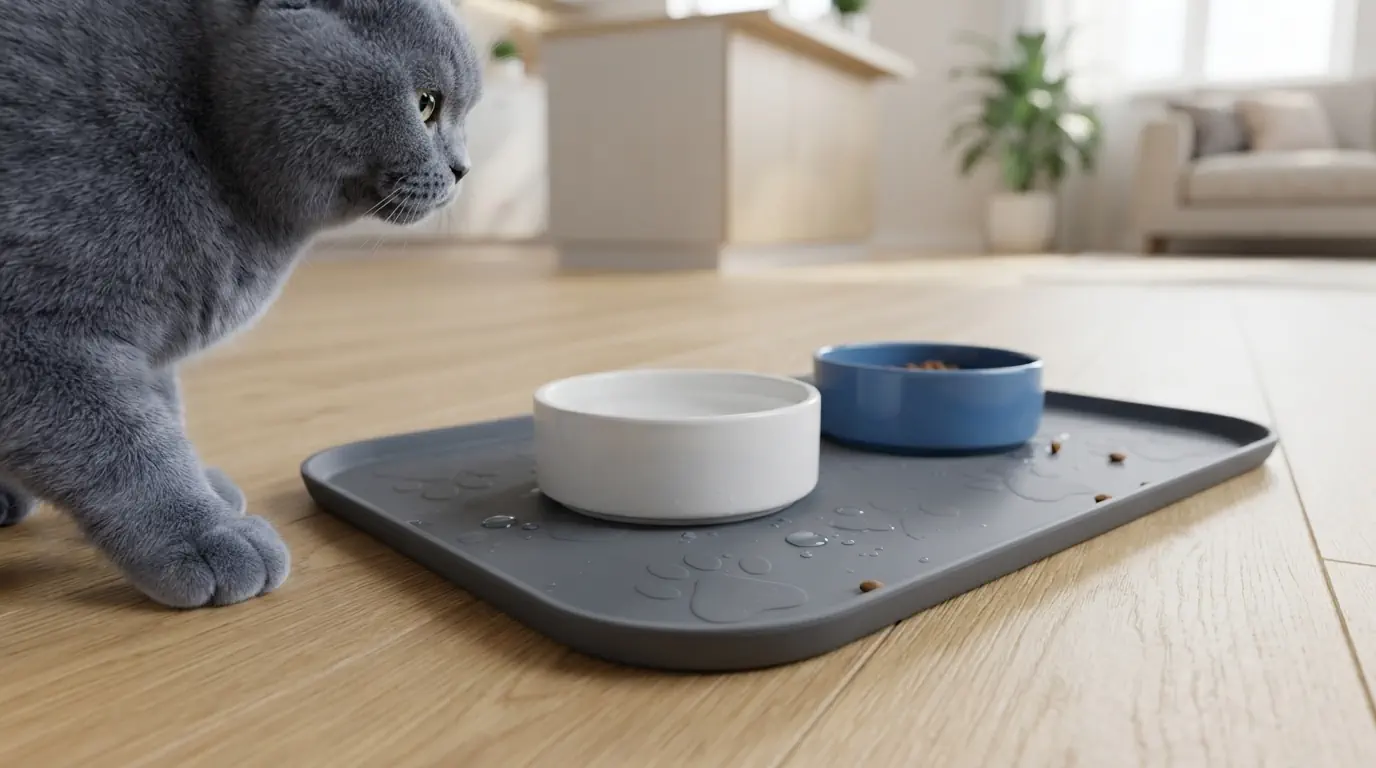
4. Mats and Cleanliness – A Mess-Free Zone 🧹
British Shorthairs like order, but eating meat or wet food can be messy.
- Bowl Mat: Essential. Preferably silicone with a small rim (to catch water if the cat decides to "swim" with its paw in the bowl). It’s easy to wash under the tap.
- Biofilm: That slippery residue at the bottom of the water bowl. These are bacteria colonies! Simply changing the water is not enough. Water bowls must be washed with detergent and a sponge daily, just like the food bowls.
🐾 Want to become an expert in British Shorthair care?
All our guides, nutrition secrets, pre-purchase tips, and proven breeding tricks have been gathered by us in one place.
I want to discover more breeder secrets! →