


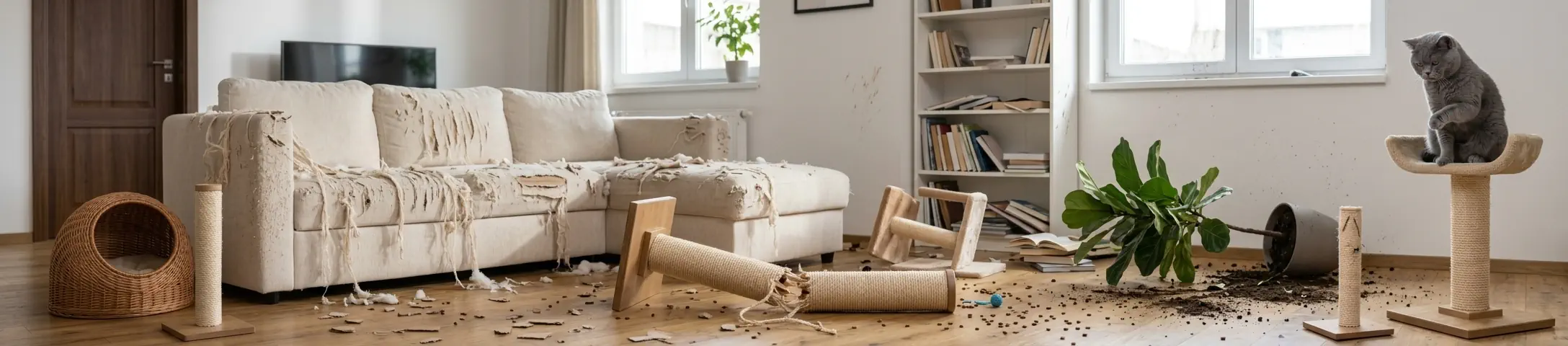
When putting together a starter kit for your cat, the scratching post often ends up at the bottom of the shopping list. "I'll just buy a small one at the supermarket so it doesn't take up too much space," many future owners think.
This is a mistake that will cost you... new upholstery on your sofa.
At British Rainbow*PL, we say it straight: Scratching is not out of spite. It’s an instinct. A cat scratches to:
- Leave a calling card: They have scent glands between their paw pads. Scratching a spot is a sign saying, "I was here, this is my territory!".
- Get a "pedicure": It sheds the dead outer layer of the claw, revealing a new, sharp dagger underneath.
- Stretch: It’s cat yoga. After a nap, a cat needs to stretch its back muscles.
If you don't give them a proper piece of furniture for this, they will choose one themselves. And usually, it will be your favorite armchair.
Here is how to choose a scratching post that will survive a confrontation with a powerful British Shorthair.
1. Stability: The "Drunken Sailor" Test ⚓
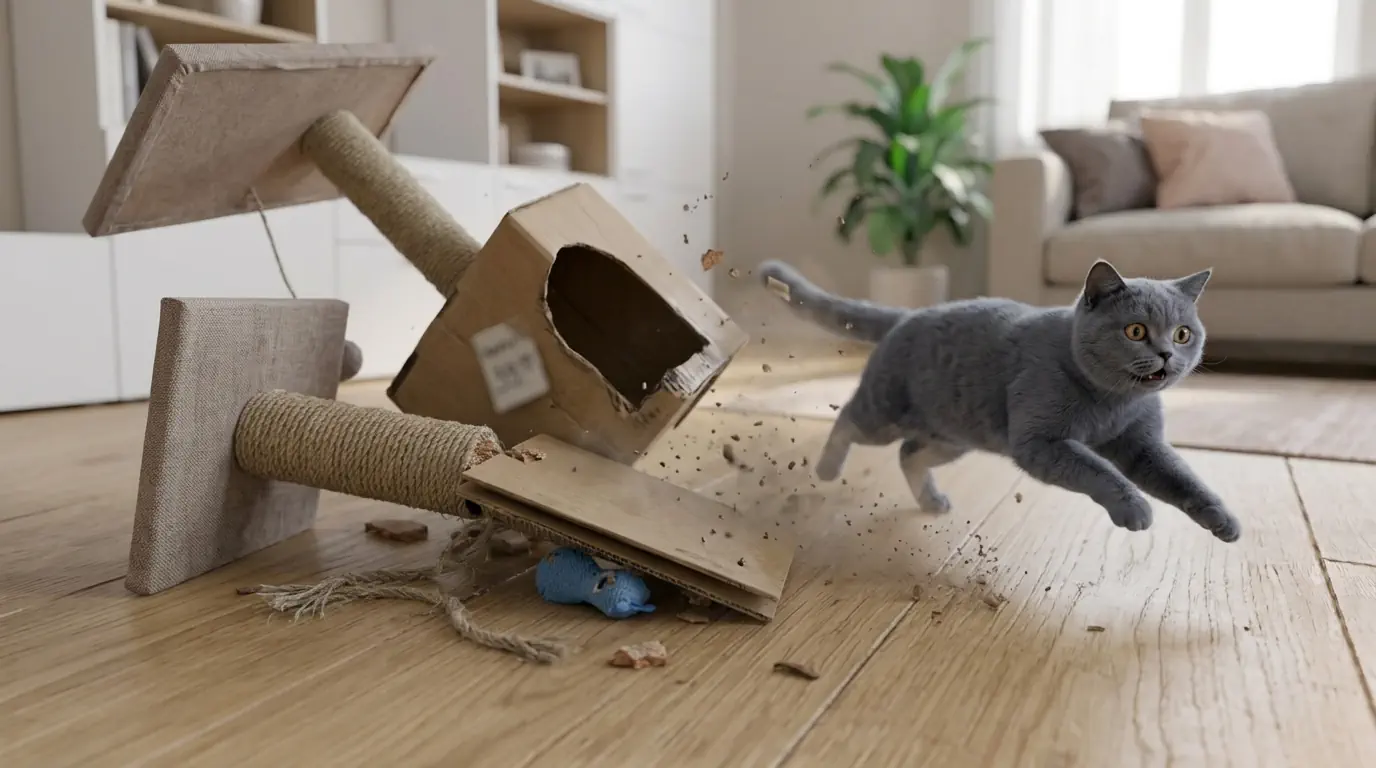
A British Shorthair is not a dainty house cat. An adult male is 6-8 kg (13-18 lbs) of muscle running at full speed. A cheap scratching post with a thin base that wobbles at the slightest touch is a deadly hazard for a cat. If a cat jumps on a post once and it wobbles or tips over – they will never step on it again.
The British Rainbow*PL Rule: The scratching post must be heavy and stable. The base should be wide and thick (preferably made of wood or heavy-duty board). Before you buy, try to tip it over with one hand in the store. If you can do it, your cat will do it in 3 seconds.
2. Height: Can Your Cat Stand on Tiptoes? 📏
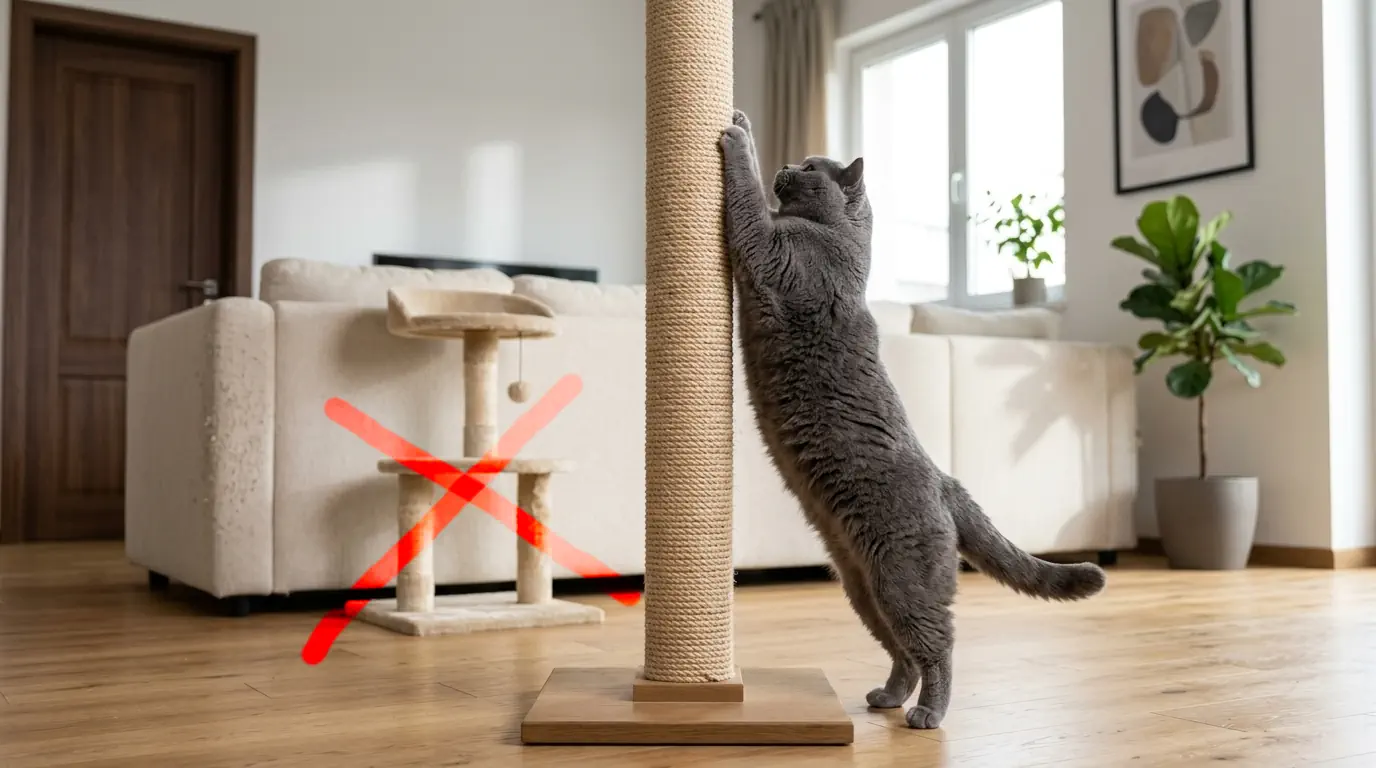
This is the most common sin of scratching post manufacturers. They make posts 40-50 cm (16-20 in) tall. For an adult British Shorthair, that’s not enough! For a cat to stretch effectively, they must be able to stand on their hind legs, reach their front paws as high as possible, and dig their claws into the sisal.
- Minimum: The scratching surface must have at least 70-80 cm (28-32 in) of continuous surface (without shelves or obstacles along the way).
- If the post is too short: The cat will go scratch the sofa back or the door frame because they are tall enough.
3. Types of Scratching Posts: What Do Brits Like?
You don't need to build a jungle in your home. Strategically selected elements are enough.
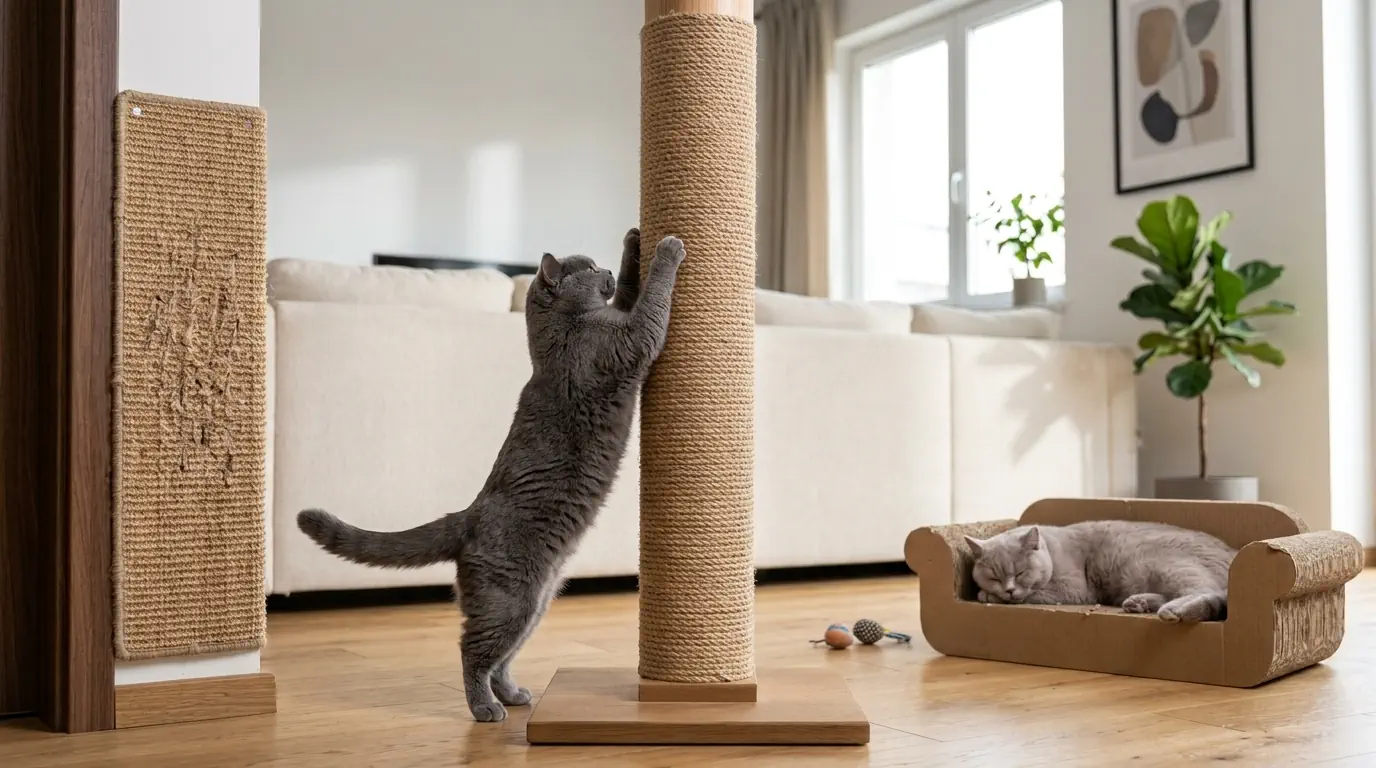
A. Vertical Post (Pillar / Tree) 🌳
This is the base. It must have thick pillars (diameter of at least 10-12 cm / 4-5 in).
- Material: Natural sisal rope or jute is best. Avoid plush in the scratching area – the cat wants to feel the resistance of the material, not slide over it.
- Quality: In cheap posts, the pillars are made of cardboard tubes (like a paper towel roll). A strong British cat can break this in six months. Look for posts made of solid wood or reinforced PVC.
B. Horizontal Scratcher (Cardboard) 📦
Cats also love to scratch while lying down (as if they were tearing up a carpet). This is where corrugated cardboard scratchers work great. They are cheap, eco-friendly, and cats go crazy for them.
- Cons: They leave bits of cardboard behind (requires more frequent vacuuming).
- Pros: They are perfect for lounging and sleeping.
C. Scratching Mat (Wall/Corner Mounted) 🧱
Short on space? Screw a sisal mat flat to the wall or on a wall corner that the cat has already "targeted." This saves space and protects your plaster.
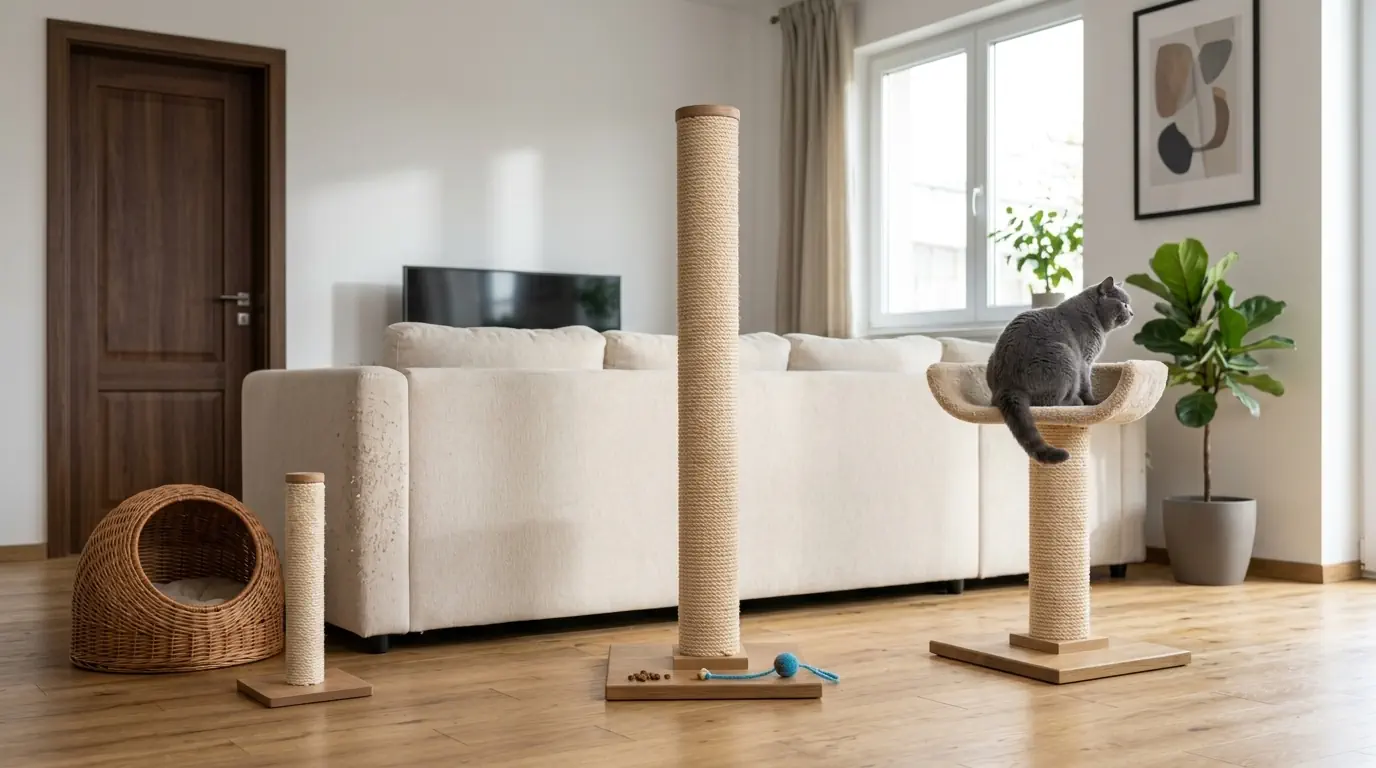
4. Location: Where to Put This "Furniture"? 📍
This is the key to success. The most beautiful scratching post hidden in a corner behind a wardrobe or in a guest bedroom will be useless.
Cats scratch in "social" areas and along high-traffic routes. Where should you put the post?
- In the center of life: The living room, close to the sofa (to offer an alternative).
- By the window: Cats love observing the world. A scratching post with a perch by the window is their television.
- Near their bed: A cat scratches right after waking up. A small pillar near their sleeping spot is a home run.
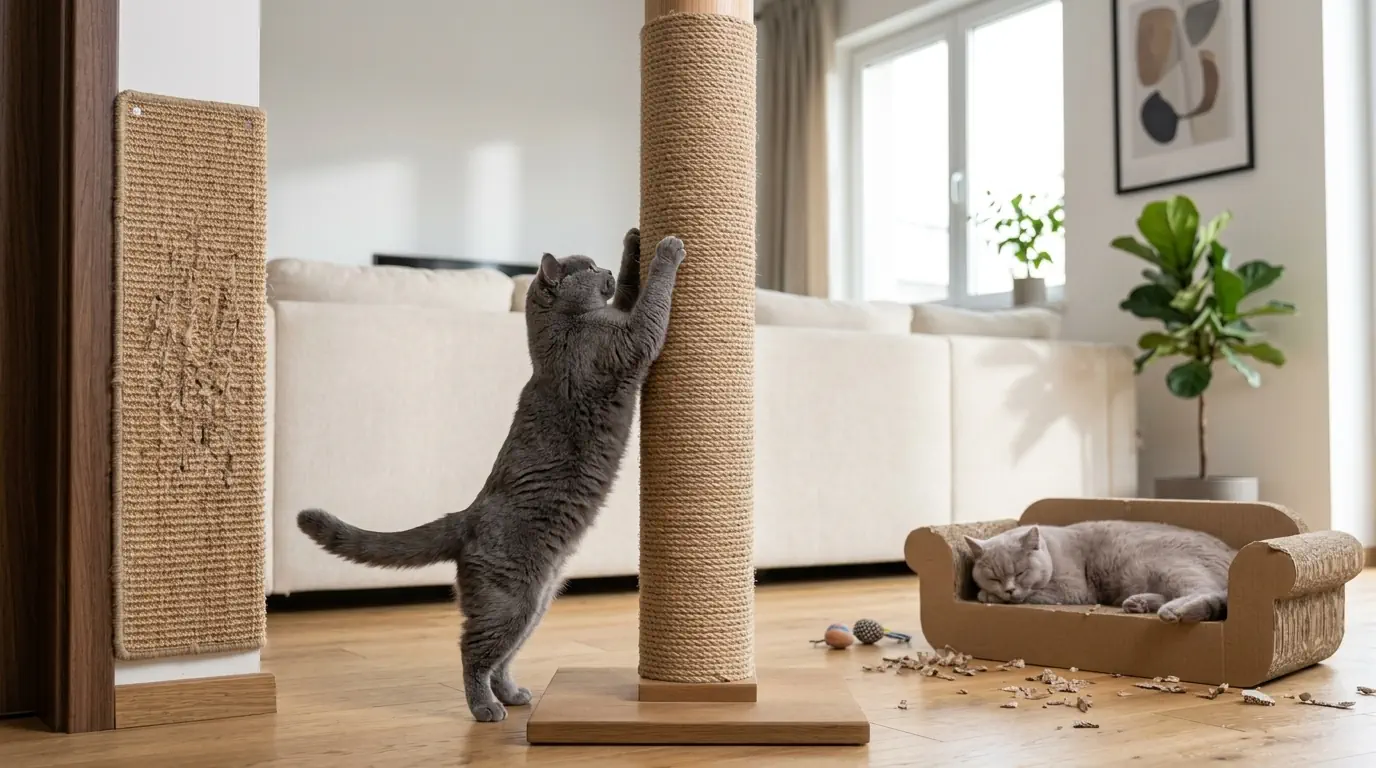
5. How to Convince Your Cat to Use the Post? (Breeder's Tricks) 🪄
Is your cat avoiding the new purchase? Don't worry.
- Don't force it: Don't grab the cat's paws and "rub" them on the post. This will only scare them.
- Scented encouragement: Sprinkle the post with catnip or spray it with valerian spray (available at pet stores).
- Play: Use a feather wand so that the "prey" escapes onto the post. While chasing the prey, the cat will dig its claws into the pillar and discover: "Hey, this feels great!".
🐾 Want to become an expert in British Shorthair care?
All our guides, nutrition secrets, pre-purchase tips, and proven breeding tricks have been gathered by us in one place.
I want to discover more breeder secrets! →