

Which Litter Box and Litter to Choose? A Guide to Feline Hygiene for Future Owners
Cats are animals with cleanliness written into their DNA. They can spend hours grooming their fur, and taking care of their physiological needs is an intimate ritual for them that requires peace and the right conditions.
For a British Shorthair – a large, massive breed that values comfort – choosing the right equipment is crucial. Here is everything you need to know before your new family member crosses the threshold.
Important breeder observation: As a breeder at British Rainbow *PL, I know one thing: 90% of problems with "accidents" outside the litter box result from a poorly chosen toilet or litter.
1. The Litter Box: Size Matters (Especially for a Brit!)
The basic mistake of a beginner cat owner? Buying a small, "cute" litter box for a kitten. Remember that your little, fluffy ball of fur will soon turn into a sturdy, 5-7 kg "teddy bear".
Golden Rule: The litter box must be large (XL/Jumbo)
A cat in the litter box must be able to enter freely, turn around without touching the walls, and comfortably bury their "work". If the box is too small, the cat may go right next to it – not out of spite, but due to a lack of space.
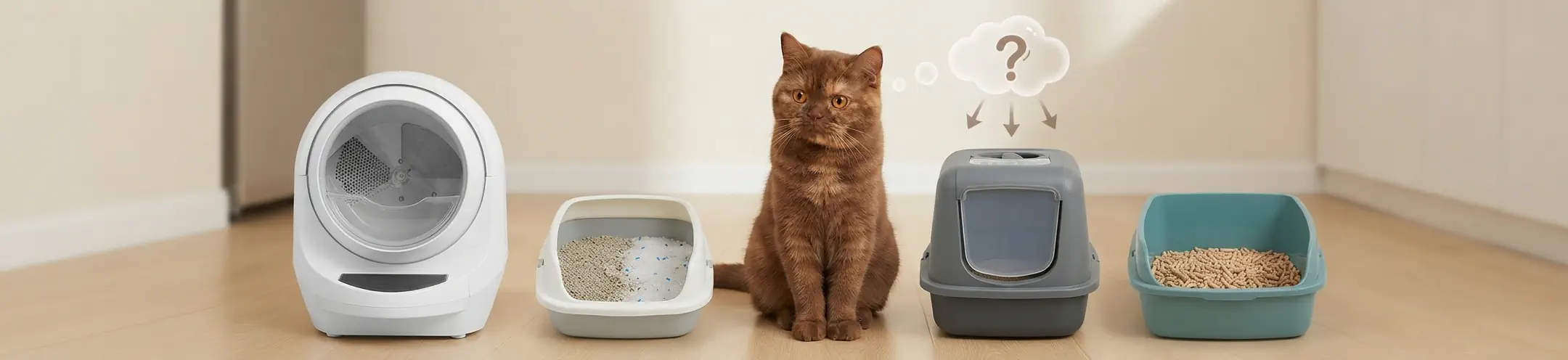
Types of Litter Boxes – What to Choose?
-
Open Litter Box:
- Pros: Cats feel safest in them (they can see their surroundings), excellent ventilation.
- Cons: Litter often ends up on the floor during burying; odors are less contained.
- For whom: For every cat, especially at the beginning of house training.
-
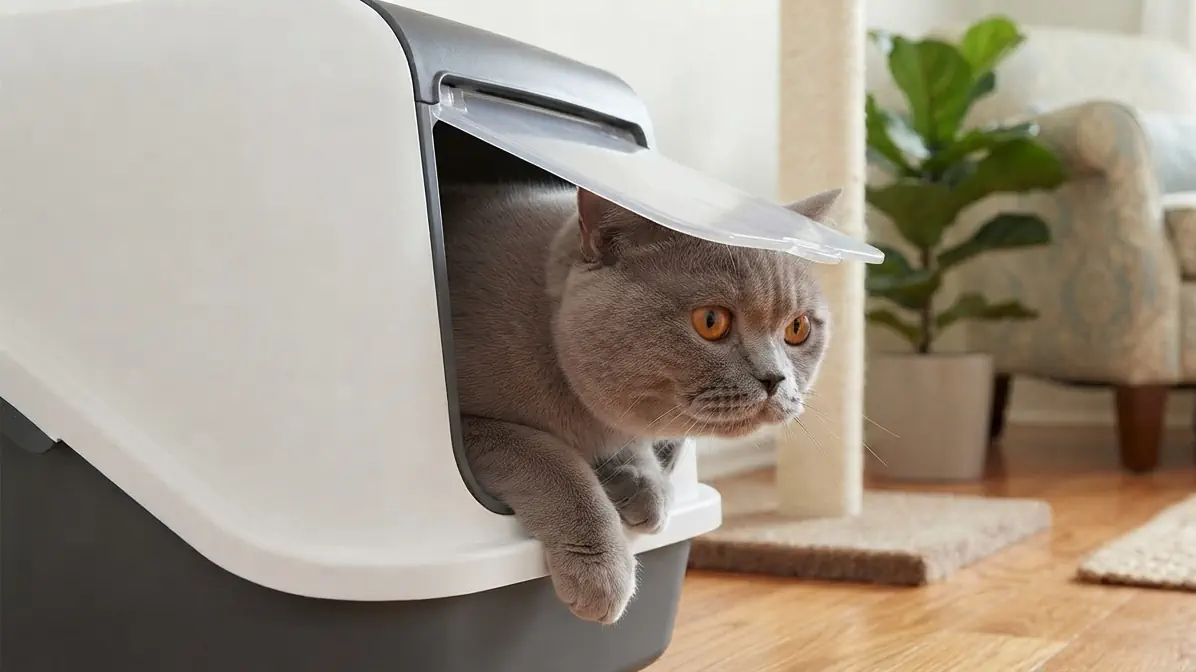
Hooded (Closed) Litter Box:
- Pros: Aesthetic, traps odors (often has a carbon filter), reduces litter tracking.
- Cons: Odors accumulate inside (for a cat, it's like a porta-potty on a hot day if you don't clean often).
- Important: At first, remove the flap (door)! The kitten must learn that it's an entrance, not a wall. Only once they are comfortable with the "cave" can you install the door.
-
Top-Entry Litter Box:
- Pros: Best protection against litter tracking and dogs (who might be interested in the contents).
- Cons: Not every cat accepts jumping into a "hole". It may be inaccessible for older cats with joint problems.
2. Litter: The Ideal Ground (Part 1)
Choosing the right litter is a vast topic. At British Rainbow *PL, we’ve tested just about everything. Here are the most popular options:
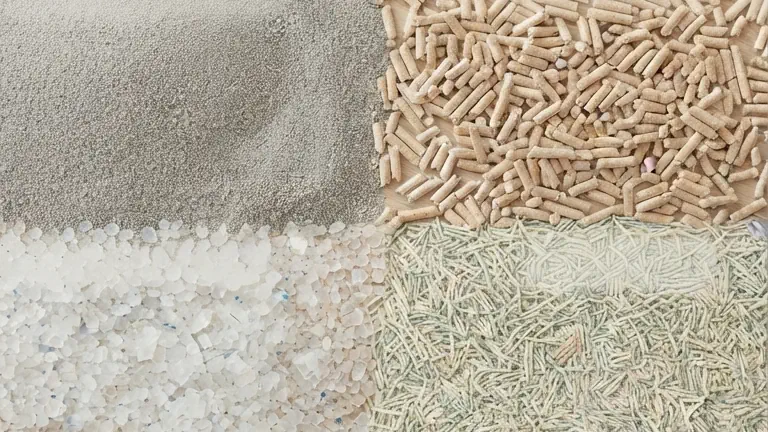
A. Bentonite Litter (e.g., Benek)
Looks like sand or fine concrete.
- Pros: Clumps excellently (forms hard balls from urine), cats instinctively like it because it resembles natural soil.
- Cons: Dusty, heavy, must not be flushed down the toilet (it will clog the pipes!), tracks on paws.
B. Wood / Corn Litter (e.g., Cat’s Best, Benek Corn)
Plant-based, ecological pellets or crumbles.
- Pros: Flushable in the toilet (huge convenience!), biodegradable, binds odors well, lightweight.
- Cons: Because it is light, it tracks very easily on cat fur throughout the house.
C. Silicone (Crystal) Litter
Transparent or milky granules that don't clump but absorb urine.
- Pros: You replace the whole batch once every 3-4 weeks (only scooping out solids), dust-free.
- Cons: Some cats don't like the "crunching" sound under their paws or the sharp edges of the crystals. It can smell bad at the bottom towards the end of the cycle.
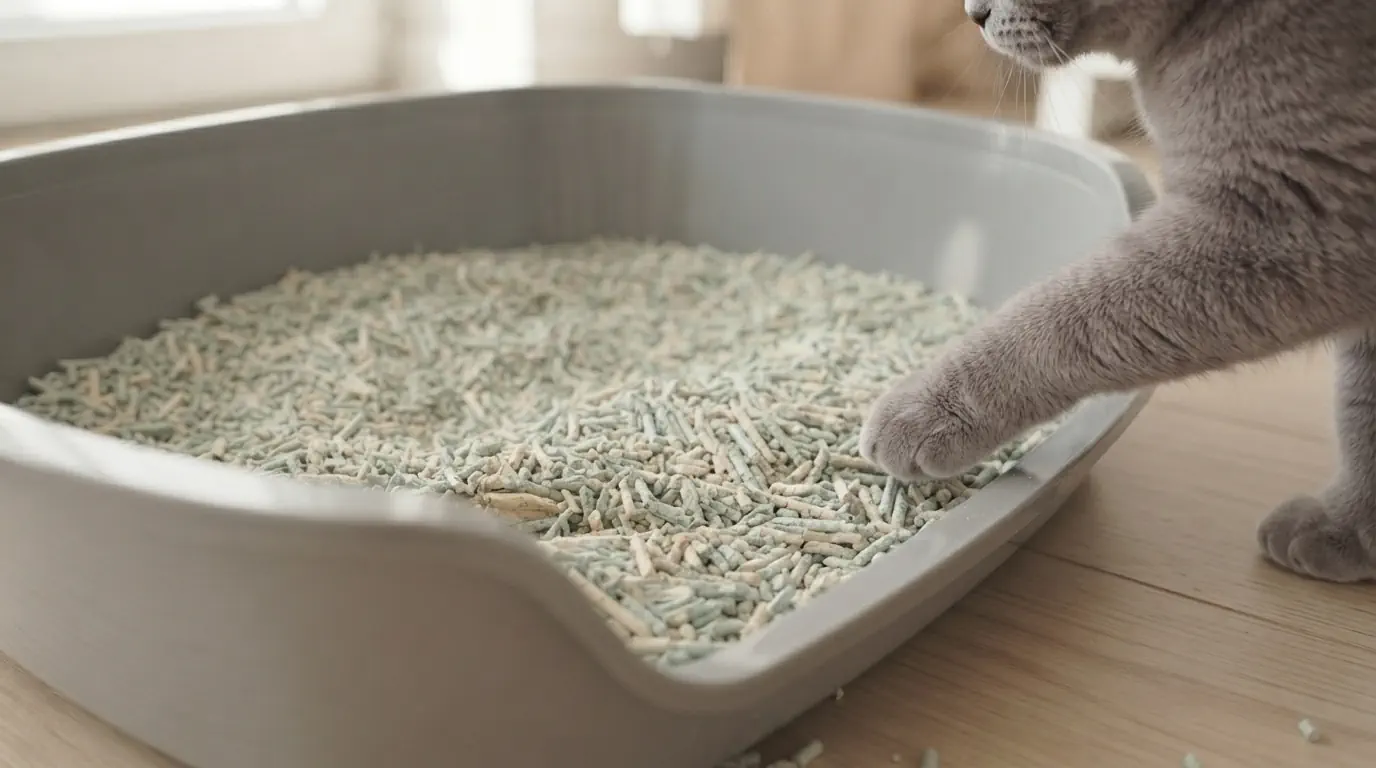
Tofu Litter – My Personal Favorite (Part 2)
This is a 100% plant-based product, made from soy fibers (often from tofu production leftovers). It comes in characteristic thin, soft pellets. It is a premium solution that combines natural features with the convenience of clumping litters.
Pros:
- Flushable: Its biggest selling point. Most tofu litters dissolve instantly in water, allowing for convenient disposal in the toilet (without the risk of clogging pipes like bentonite).
- Safety (Edible): If a small kitten eats a few granules out of curiosity, nothing will happen. It is fully digestible and non-toxic, making it an ideal choice for a "first litter".
- Dust-free: Unlike bentonite or some wood litters, tofu is almost entirely dust-free. It is a lifesaver for cats with respiratory issues and owners with allergies.
- Odor Control and Absorbency: Binds ammonia very well. Often comes in gently scented versions (e.g., green tea, milk, vanilla) that mask odors without irritating the cat.
- Paw Comfort: The pellets are soft and light. They don't prick the delicate pads of British Shorthairs and are less likely to be tracked outside the box.
Cons:
- Price: It is one of the more expensive litters on the market. The unit cost per bag is usually higher than wood or bentonite.
- Specific Scent: Natural tofu has a slightly "milky" or "sweet" smell, which some owners (or very finicky cats) may not like at first.
- Risk of Mold: Since it is a completely organic product (soy protein), in very humid, poorly ventilated bathrooms, the litter may eventually absorb moisture from the air.
Summary: Tofu litter is the "golden mean" for the modern owner. It offers the convenience of flushing (like the best wood litters) while being dust-free and highly safe for kittens. If the budget is not the main constraint, it is currently the healthiest and most hygienic choice.
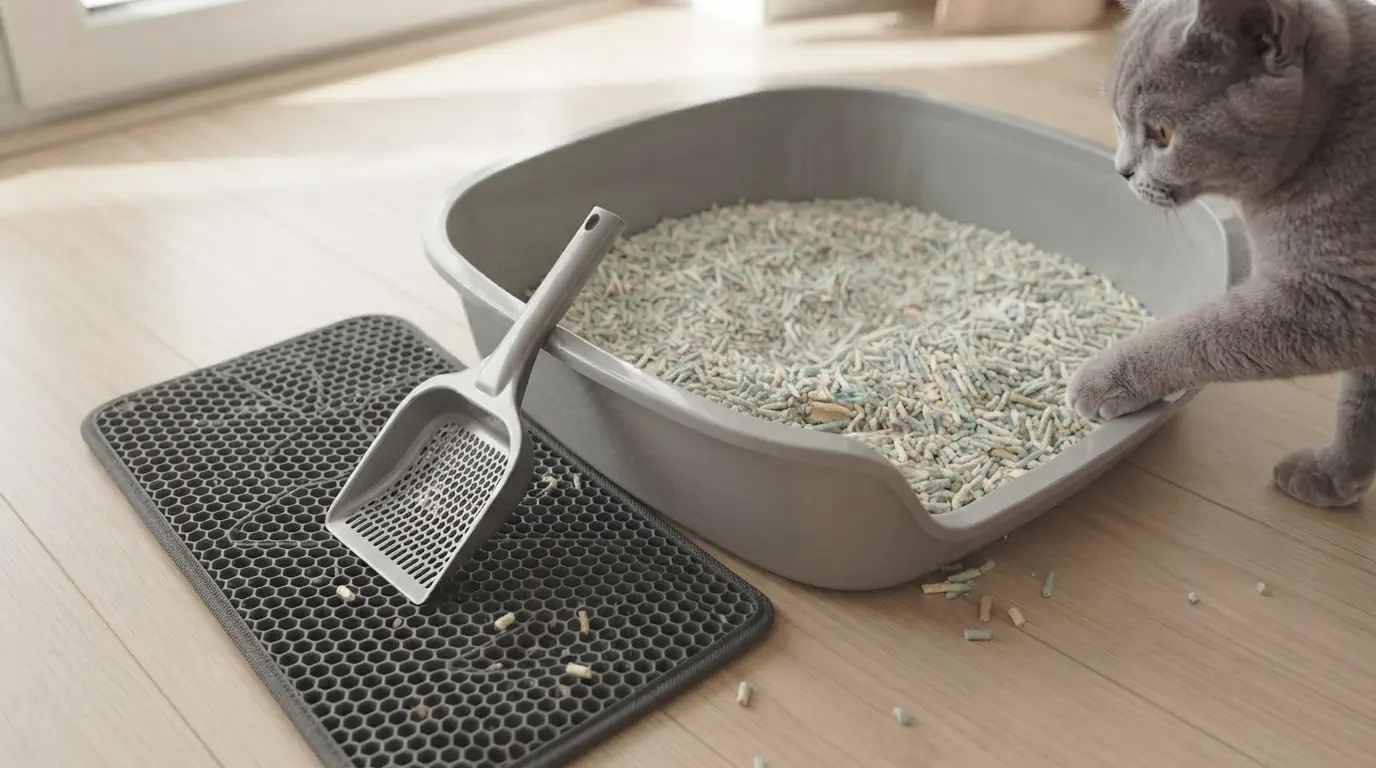
3. Essential Accessories: Scoop and Mat
The litter box itself is not everything. To maintain hygiene (and your own mental health), you need:
- Scoop: Must be matched to the litter type (fine mesh for bentonite; larger holes for wood/silicone).
- Litter Mat: A special mat with holes (often "honeycomb" type) that catches litter from the cat's paws. It saves your floors from becoming a beach.
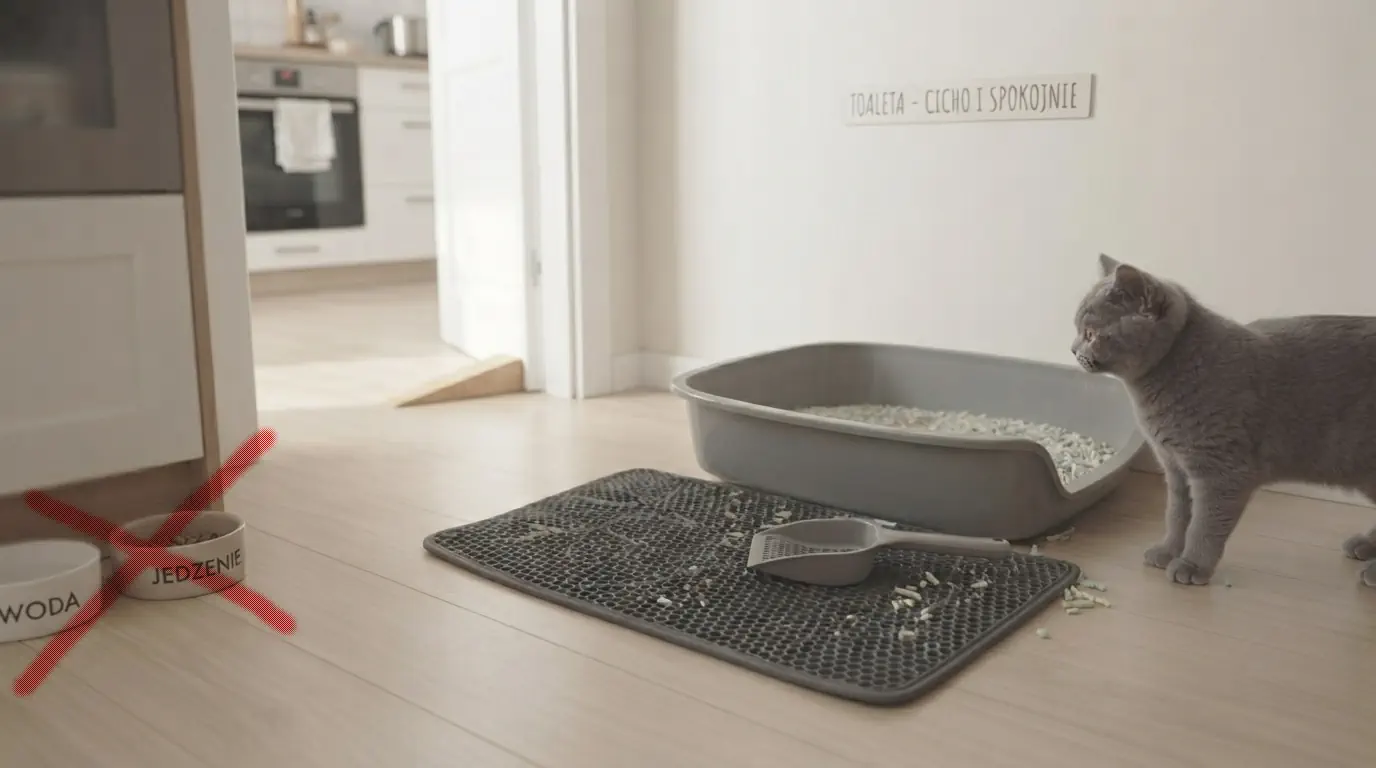
4. Where to Place the Litter Box? Strategic Location
The toilet cannot stand just anywhere. A bad location can discourage the cat from using it.
- Away from food: No one likes to eat in the toilet. Bowls and the litter box must be in different rooms (or on opposite ends of a large room).
- Peace and Quiet: Avoid busy hallways and loud appliances. A litter box next to a washing machine that suddenly starts spinning can scare a cat so much they won't return.
- 24/7 Access: Make sure the door to the room with the litter box is always ajar or has a cat flap installed.
5. Golden Advice from British Rainbow *PL for a Start 🌟
Don't change everything at once! When you pick up a kitten from us, you will receive information on which litter was used in the cattery. Buy exactly the same litter for the first few weeks in the new home. The stress of moving is significant – a familiar smell and texture under their paws will give the kitten a sense of security.
If you want to change to a different litter (e.g., from bentonite to wood), do it gradually by mixing the new one into the old over about 2 weeks.